


If you want to understand where Reeder Pallet is headed, don’t start with the new building. Start with the scrap. That’s where the story really begins.

In the old plant, scrap was a problem. It was handled, moved, dumped and handled again. Forklift drivers spent hours each day chasing hoppers. Labor was wasted. Flow was interrupted. Efficiency leaked out of the system in five-minute increments.
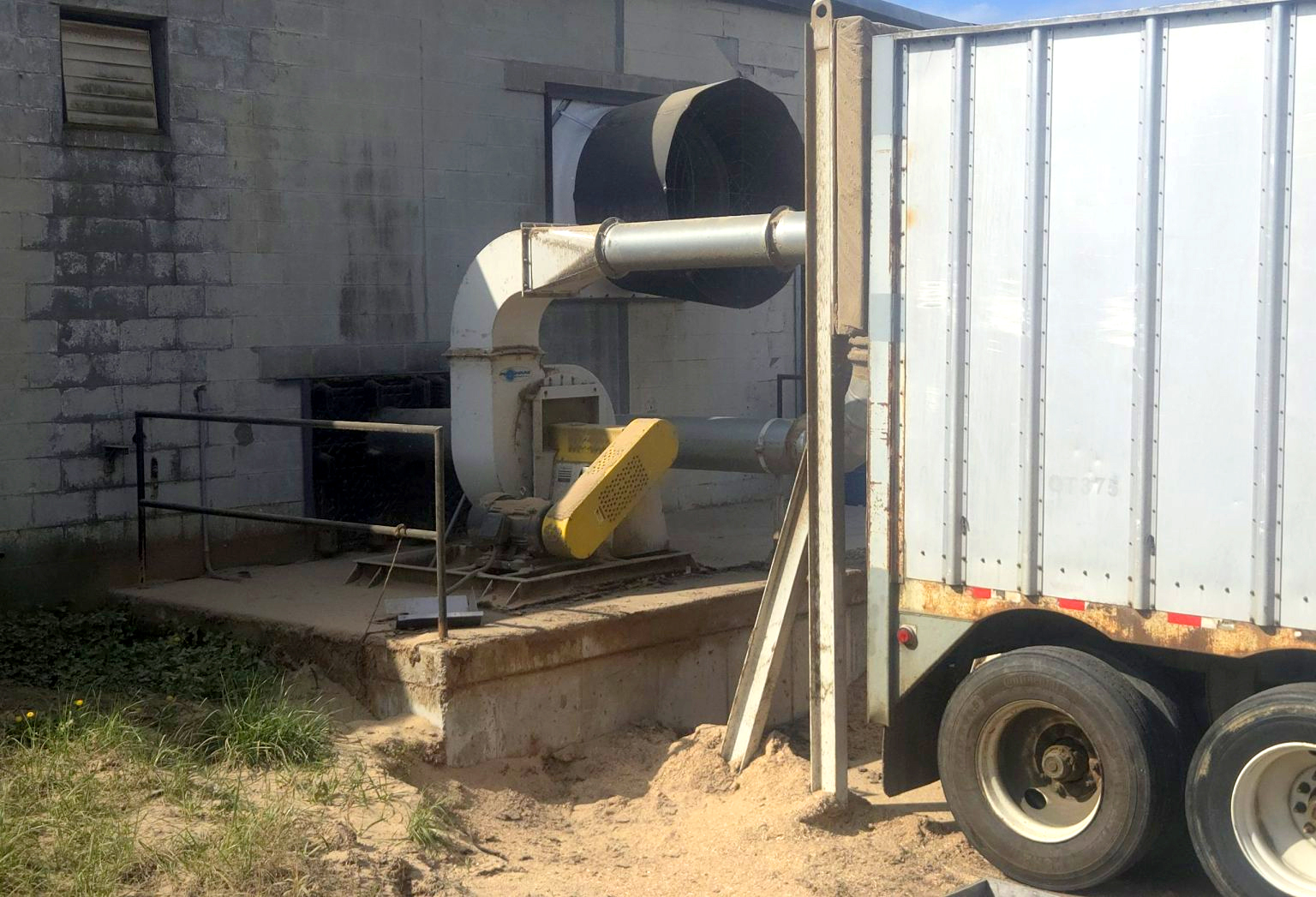
Today, that scrap moves with purpose, riding conveyors, feeding directly into a powerful grinding system engineered by Boulware Equipment. This system is built around a re-built Cresswood grinder that runs so effectively management doesn’t even think about it anymore.
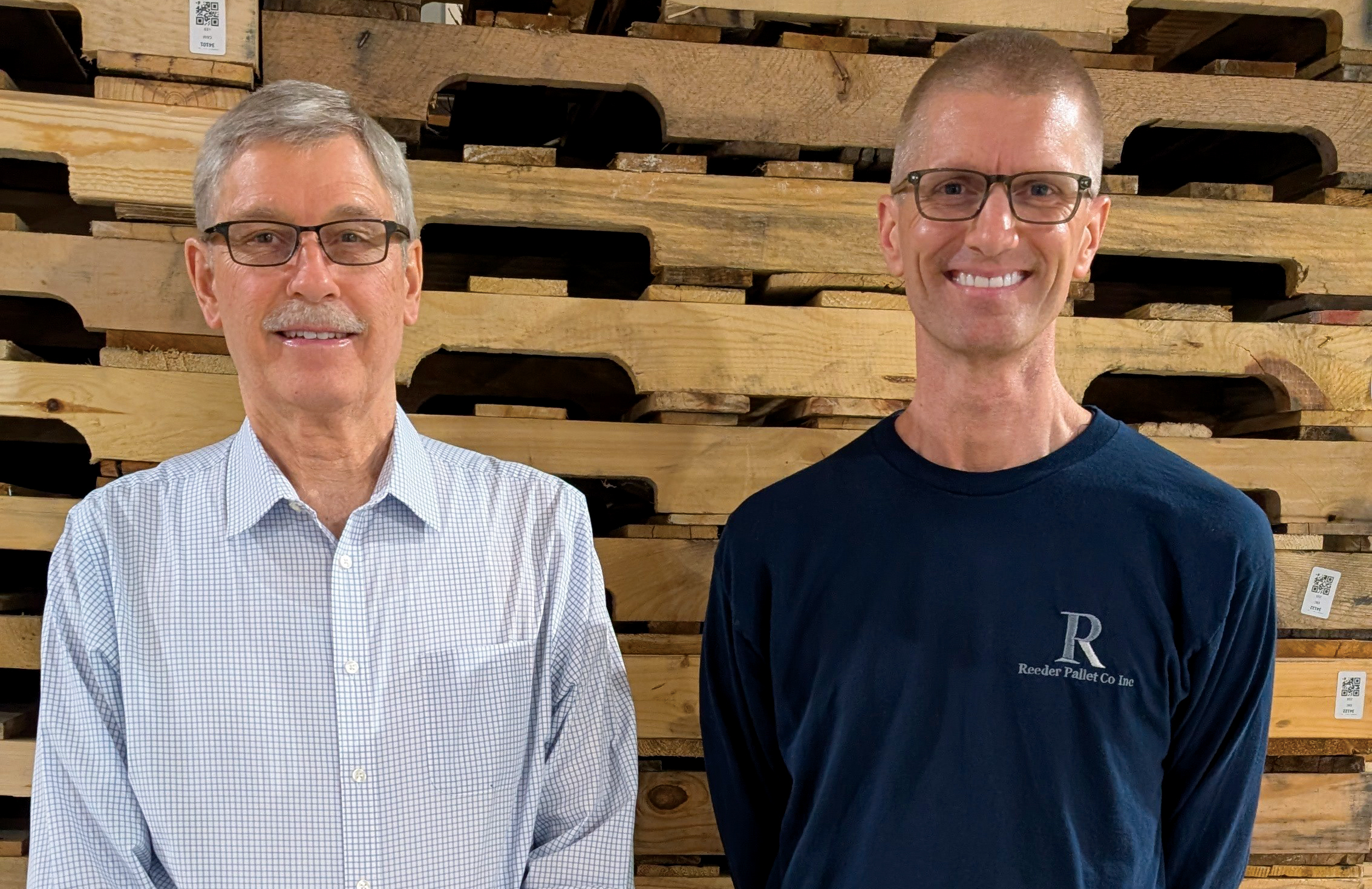
“It is one thing that I never think about in the course of my day,” said, Matt Reeder, owner of Reeder Pallet. “That tells you everything you need to know.”
But the grinder is more than just a machine. It’s a centerpiece in a larger story, a company whose leadership learned to grow the right way by first making a lot of mistakes.
Built from the Ground Up…Twice
Reeder Pallet’s roots go back to the summer of 1989, when Matt’s father, Cecil Reeder, stumbled into the pallet business almost by accident. “A customer asked if he knew anyone who could haul off broken pallets,” Matt Reeder recalled. “Within a week, another asked if he knew anyone who could supply pallets. Just like that, we were in business.”
What started in a tractor barn with a family crew producing 100 pallets on Saturdays steadily grew into a full-time operation. By 1993, the company had built its first dedicated facility. It was a modest 3,080-square-foot building that served as home base for more than three decades. But with growth came critical lessons.
“We grew too quickly in the early ‘90s,” Reeder admitted. “When I came to work in ’99, we were a financially insolvent mess.”
The company regrouped, downsized and rebuilt. This time a disciplined mindset would shape every major decision going forward, especially the biggest one of all: relocating the business.
A Long Road to the Right Facility
Reeder Pallet began seriously searching for a new location around 2017. Company leadership followed a detailed approach evaluating six different properties. Each time, the team would map the land, design a plant layout, and envision operations in detail—only to hit a roadblock, such as zoning issues, infrastructure problems and geographical challenges.
“We would invest a month or two into each property,” Reeder said. “And every time, something wouldn’t work. But every time, we learned something.”
This disciplined process became invaluable. Each failed site refined their thinking. Each redesign improved their understanding of flow. In 2019, they purchased a 60-acre tract and planned to build. Then COVID hit, which put their plans on pause. By 2023, they were ready again. But this time, a permit issue over a 400-square-foot office expansion forced another six-month delay. That’s when everything changed.
In early 2024, a warehouse in Robbins, North Carolina became available. At first glance, Matt didn’t like it. “I hated it,” he admitted bluntly. “I couldn’t make the layout work.”
For a week, he wrestled with the design. Nothing clicked. Then came the moment he still struggles to fully explain. “God woke me up at 3:00 on a Sunday morning, and everything just fell into place,” Reeder said. “I went to my computer and laid it out exactly the way I saw it, and it worked perfectly.”
The result? A facility that exceeded anything they had planned.
Instead of building a 20,000-square-foot plant, they acquired a 33,000-square-foot warehouse at roughly the same cost. “Every bit of it has just been so worth the wait,” he said. “It’s been an incredible blessing.”

Boulware’s Blueprint for Efficiency
While faith guided the direction, execution required expertise. That’s where Boulware Equipment stepped in and made a lasting impact. Reeder had worked with Brad Boulware before, purchasing a Cresswood grinder in 2016. That relationship made the decision easy when it came time to scale up.
“Brad was incredibly knowledgeable and helpful,” Reeder said. “So, it was a no-brainer to call him again.” The team at Boulware Equipment led a collaborative design process. They didn’t just sell a grinder; they helped engineer the system around it and asked the right questions.
Some key questions considered include: Where does scrap originate? How far does it travel? Where are the bottlenecks? How can you eliminate handling steps?
And at the center of that system sits a grinder package from Boulware Equipment and Cresswood that has fundamentally changed how the company operates. “Everything we do now flows into that grinder,” said Matt Reeder. “It’s the heartbeat of the plant.”
Reeder remembered, “Brad and Jake came into our plant while we were remodeling. They walked the layout, took measurements, and suggested tweaks to improve scrap flow and grinder placement.”
Within days, Reeder had CAD drawings not just of the grinder, but of how it integrated into the entire operation. That level of engagement made a difference.
“They didn’t just look at a machine. They looked at our whole process,” Reeder said.
The Grinder That Changed Everything
At the heart of the system is a rebuilt Cresswood XR700-150 grinder—a strategic upgrade that reflects both operational foresight and financial discipline. Initially, Reeder considered a machine similar to his original HF 60-75. But Boulware pushed him to think bigger.
“Brad knew our growth plans,” Reeder said. “He knew we’d outgrow the smaller machine in two to three years.”
Instead, they landed on a rebuilt unit that delivered significantly more capacity—at a compelling price point. “It was about a $ 65,000 dollar savings,” Reeder noted. “And it’s basically a brand-new machine, and the decision has certainly paid off.”
For those wary of rebuilt equipment, Reeder offers a different perspective. “Anything that could cause a problem has already been fixed,” he explained. “In some ways, it’s better than new.”
The XR700 handles everything Reeder throws at it, with room to grow. It features an integrated blower system that feeds directly into trailers, eliminating the mess and inefficiency of open-top handling. There’s no more material loss on windy days or extra handling. Like most high-end grinding systems, the XR700 includes a robust magnetic separation system to remove nails and metal, which helps maintain consistent fiber quality.
“Our old setup was just a mess—chips blowing everywhere,” he said. “Now it’s clean, controlled, and efficient.”
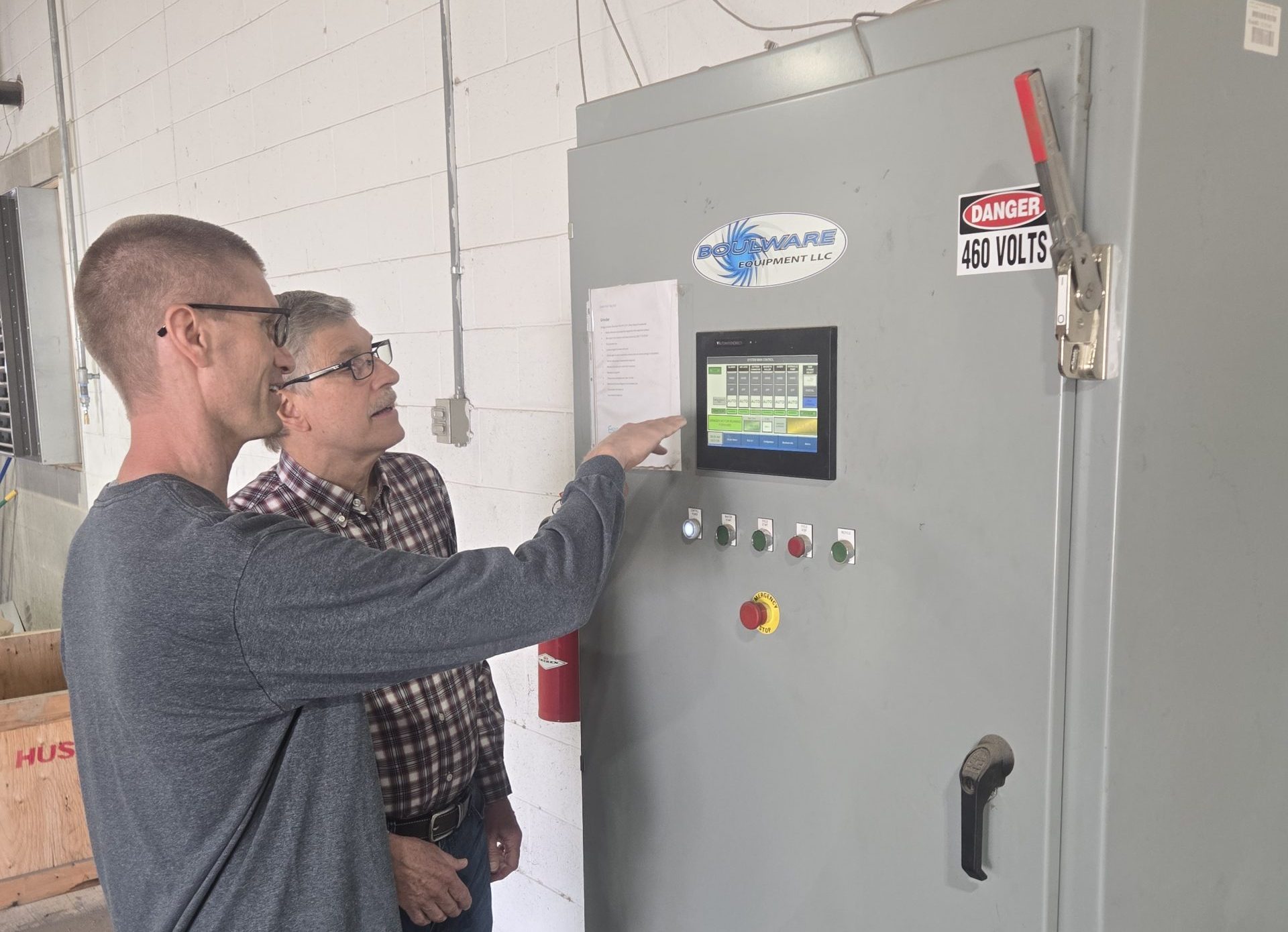
Additional features, such as improved screen access, enhanced auger performance and remote diagnostic capabilities have elevated reliability and ease of maintenance.
“Jake can literally monitor the grinder remotely if needed,” Reeder said. “That’s a pretty neat feature.”
When it comes to maintenance, seemingly small design improvements have made a big difference. “The screens are easier to access, easier to change,” Reeder noted. “That saves time.”
Plus, the upgraded auger system reduces hang-ups and keeps material flowing. Reeder explained,
“It doesn’t get stuck like our old one did, and that’s a huge time saver.”
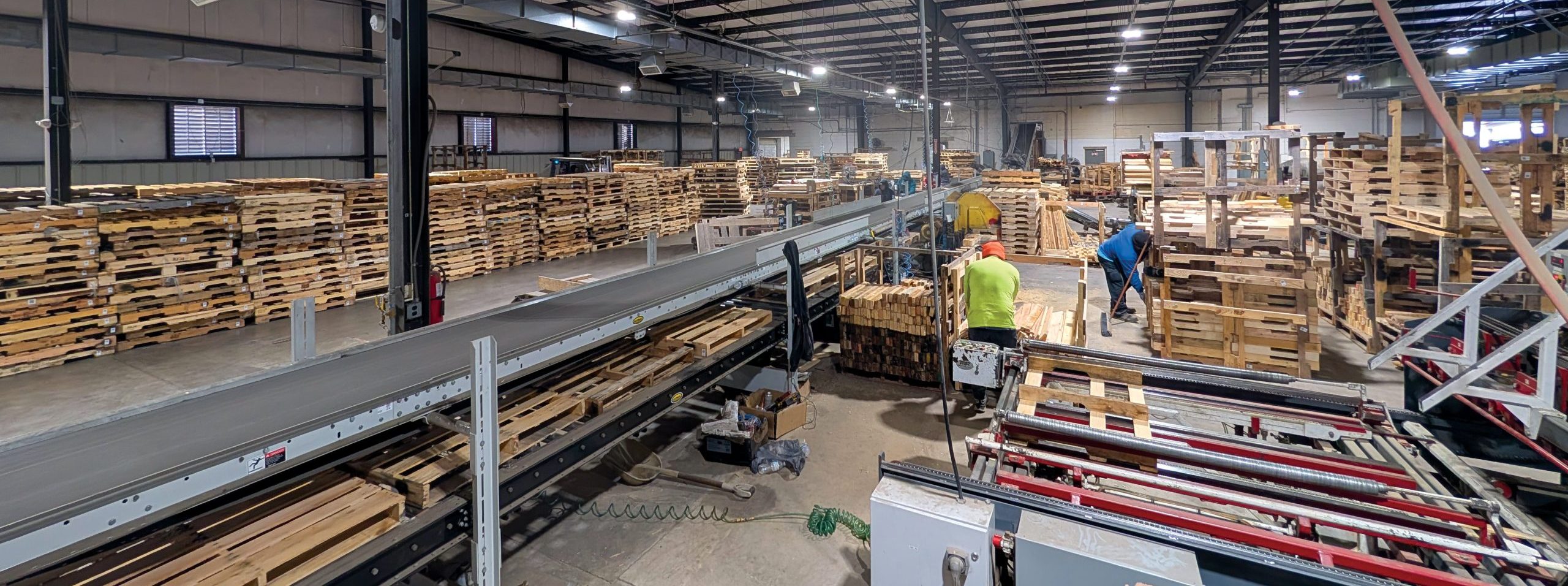
But perhaps the biggest win is what the system enabled: a complete redesign of material flow. The new facility revolves around a central conveyor system, a design concept that Boulware helped refine. All scrap boards, cut-offs and waste feed directly into the grinder. This design eliminates the hoppers as well as double handling and wasted motion.
“That was one of our biggest goals—eliminating hoppers,” Reeder explained. “They were the bane of my existence.”
The impact has been significant. In the old plant design, forklift drivers spent 100 to 150 minutes per day dumping scrap hoppers. That time is now reclaimed for more productive work. “We’ve almost eliminated a forklift position just with this layout,” Reeder noted.
And the numbers back it up. In Q1 2025, the company processed 116,607 pallets in its old facility. In Q3 2025, Reeder Pallet processed 119,846 pallets with one fewer forklift driver. By rethinking everything, flow has improved, efficiency has increased and labor requirements have shrunk.
Reeder Pallet has built a steady market for its fiber. Material is sold to customers that produce plywood/chipboard and another supplying colored mulch to major retailers.
The Master Recycler Advantage
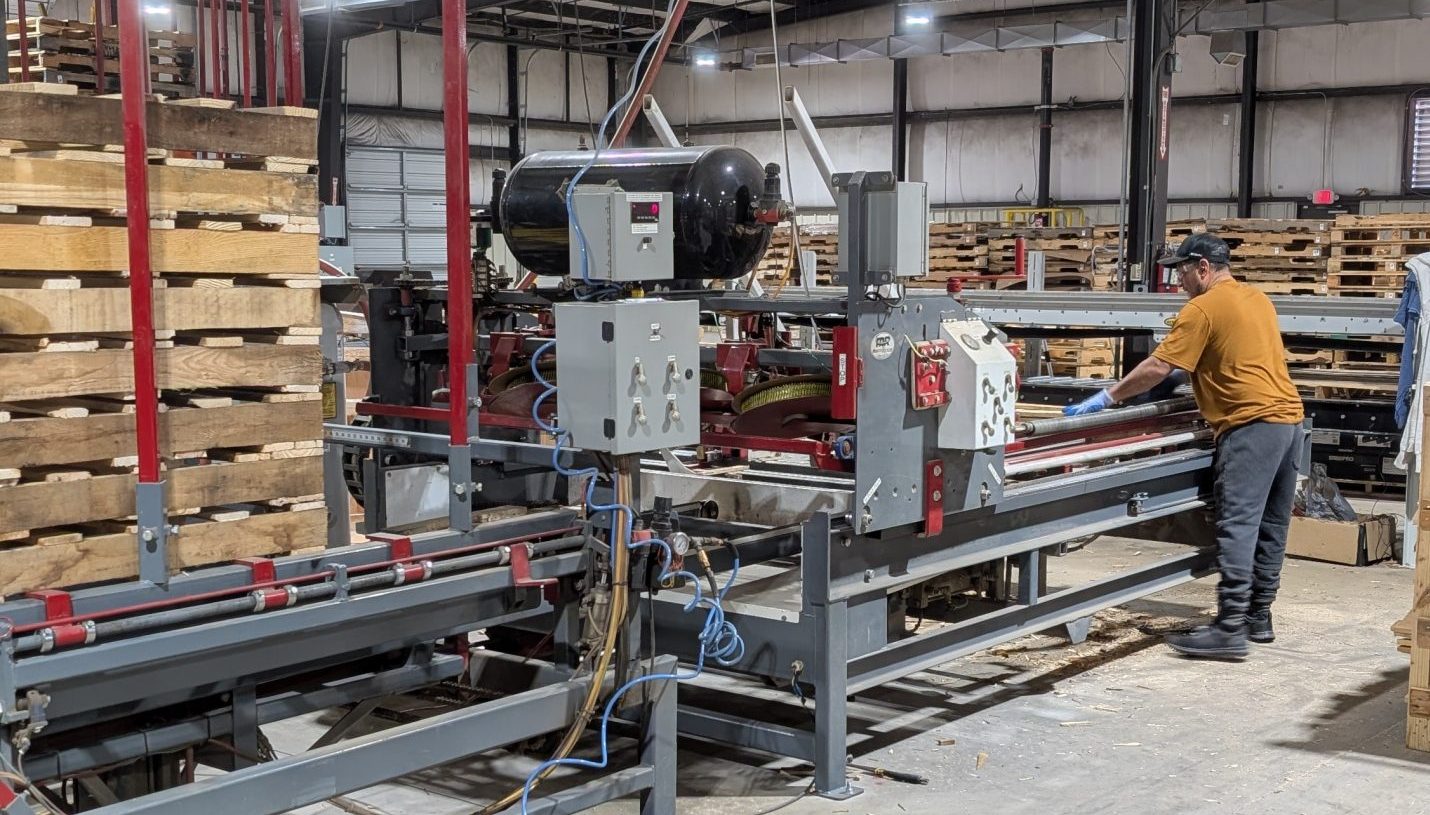
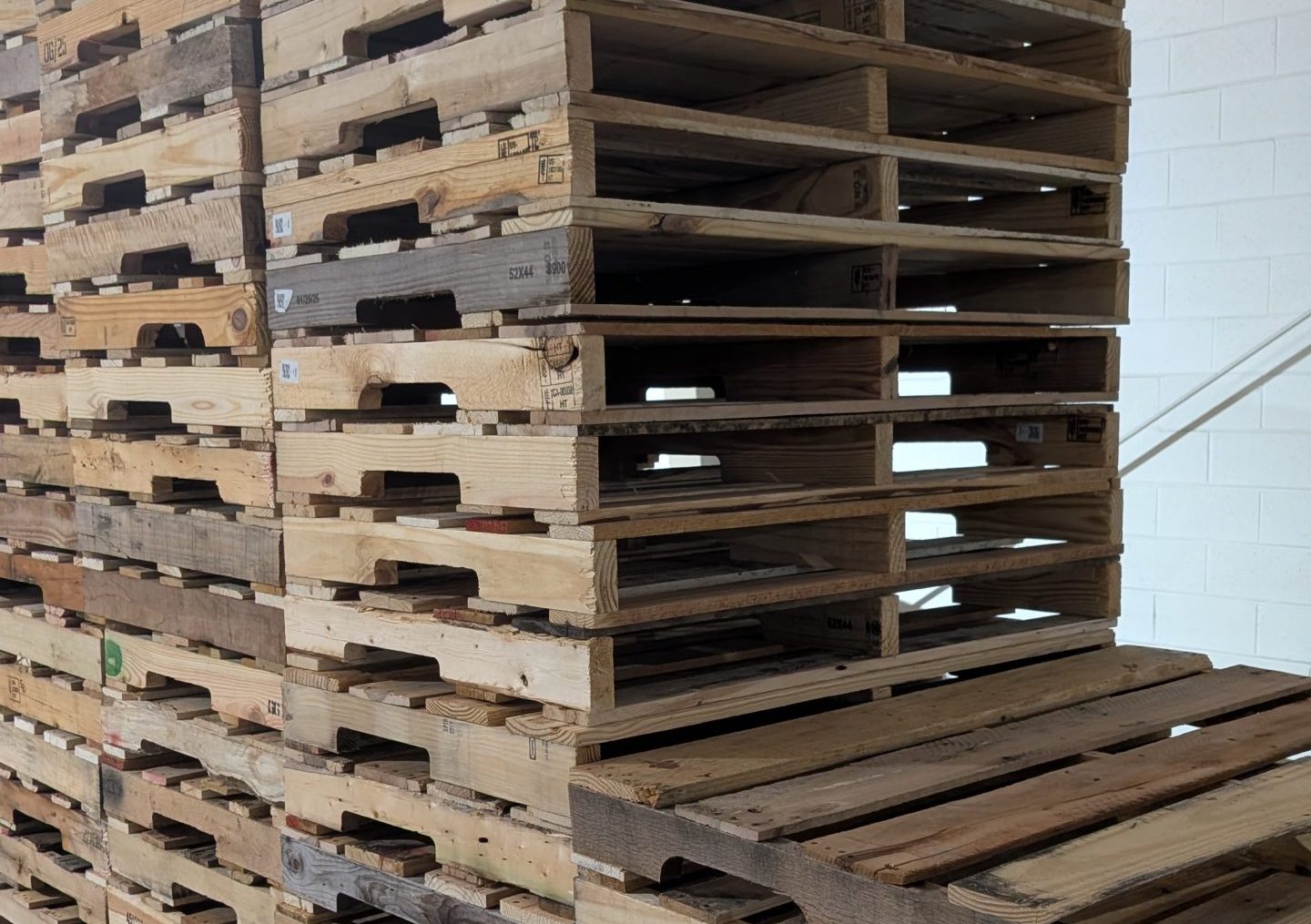
While a Cresswood grinding handles the waste stream, remanufacturing is driving growth on the production side. Reeder Pallet invested in a Master Recycler from Midwest Machinery & Automation to expand its reman capabilities. Due to its unique variable hold-down design, the Master Recycler can use recycled runners and deck boards to build new pallets.
“It’s been a big part of our effort to grow that side of the business,” Reeder said.
The machine simplifies what is traditionally a labor-intensive process, allowing a single operator to produce 300–400 pallets per day under typical conditions.
“Given the variability of recycled lumber, it does a really good job,” Reeder noted.
Like any equipment, it has occasional hiccups, but the overall performance has been strong. Combined with the company’s strategy of sourcing mixed loads (rather than chasing premium cores), the Master Recycler provides a valuable outlet for lower-grade material.
Smarter Processing, Better Results
Reeder Pallet’s operational philosophy is built around flexibility and efficiency.
Instead of presorting incoming loads, forklift drivers assess stacks and route them directly to a repair or dismantling station. A unique “prepping” process allows pallets to move between departments, reducing bottlenecks and improving repair efficiency.
“We realized our bottleneck was repair, and we had excess capacity in the unnail department,” Reeder explained. By shifting certain tasks upstream, the company eliminated hammer-and-crowbar work for repairmen. This boosted productivity and reduced physical strain.
To support this complex flow, Reeder Pallet developed its own proprietary barcode system—nicknamed “Ventura.” Each pallet receives a unique barcode tied to its load and tracked through every stage of production. “We can see who touched each pallet, how long it took, and what grade it became,” Reeder commented.
This system provides full traceability, enabling accurate production pay, quality control accountability, supplier audits and process optimization. “Our goal is that our customers don’t have to think about pallets,” Reeder said. “This system helps make that possible. The Ventura system is completely integrated into our ERP and has eliminated forklift drivers with clipboards and calculators, manual countsheets, and data entry for the office staff. There is full transparency from the dock, to the repair tables, to the ledger entry in our books.”
In its recycling plant, Reeder Pallet relies on two Heartland Fabrication unnailers—machines known for their simplicity and durability. “They’re not flashy,” Reeder said. “But they’re reliable and they work.” The facility has chop saws and a long-serving Smart Products trim saw to process components. These machines while older are still very reliable. “That trim saw is older than my teenage kids,” Reeder joked. “But it still runs great.”
A Culture That Endures
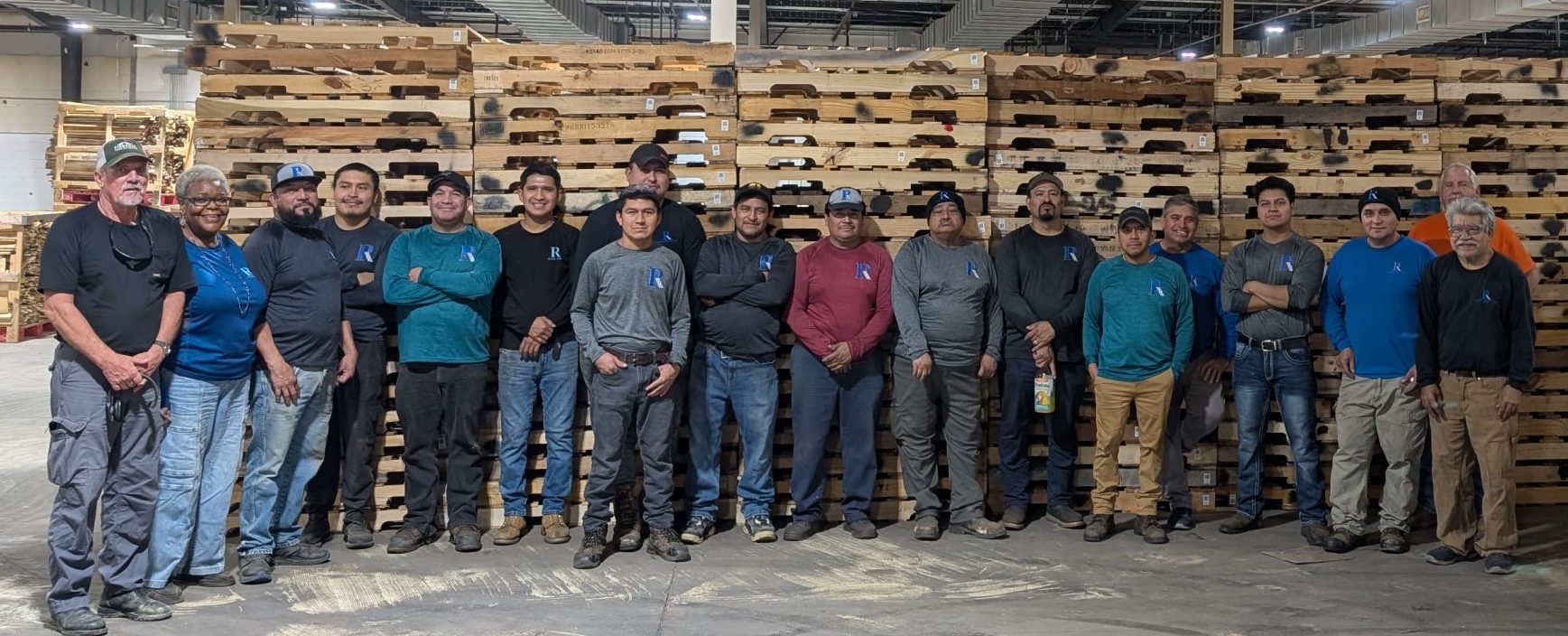
Despite the growth from 3,000 to 33,000 square feet, Reeder Pallet has worked hard to maintain its culture. “I wanted to guard our culture,” Reeder acknowledged. “That family feel, we didn’t want to lose that.”
Long-tenured employees, strong leadership, and a commitment to fair wages have created a stable workforce. “I don’t want to give my guys any reason to leave,” he admitted.
At the same time, the company is addressing challenges like an aging workforce by reducing physical strain and improving processes.
Today, Reeder Pallet processes 2,500 to 3,000 pallets per day, with capacity to grow further. The company continues to refine its Ventura tracking system, explore automation opportunities, and expand its remanufacturing capabilities. But at its core, the mission remains simple. “We want to do everything with integrity,” Reeder stated. “We want our customers to trust that what they’re getting is right.”
Lessons Learned from Redesigning a Plant for Growth
Reeder’s journey offers several key takeaways for pallet companies undergoing a facility redesign.
1.) Design for flow, not just space.
The central conveyor and grinder integration transformed efficiency.
2.) Partner with experts.
“Boulware didn’t just sell equipment, they helped us design the system.”
3.) Think long-term on equipment size and capacity expansion.
The larger grinder avoided future bottlenecks.
4.) Embrace iteration.
Every failed property search improved the final design.
5.) Stay grounded in purpose.
For Reeder, faith played a central role in decision-making.
6.) Eliminate wasted motion.
Look for steps that don’t add anything to the process or final product and seek to eliminate them, such as hoppers in this case.